April 28, 2026
By Anna Farray, Burr & Burton Academy
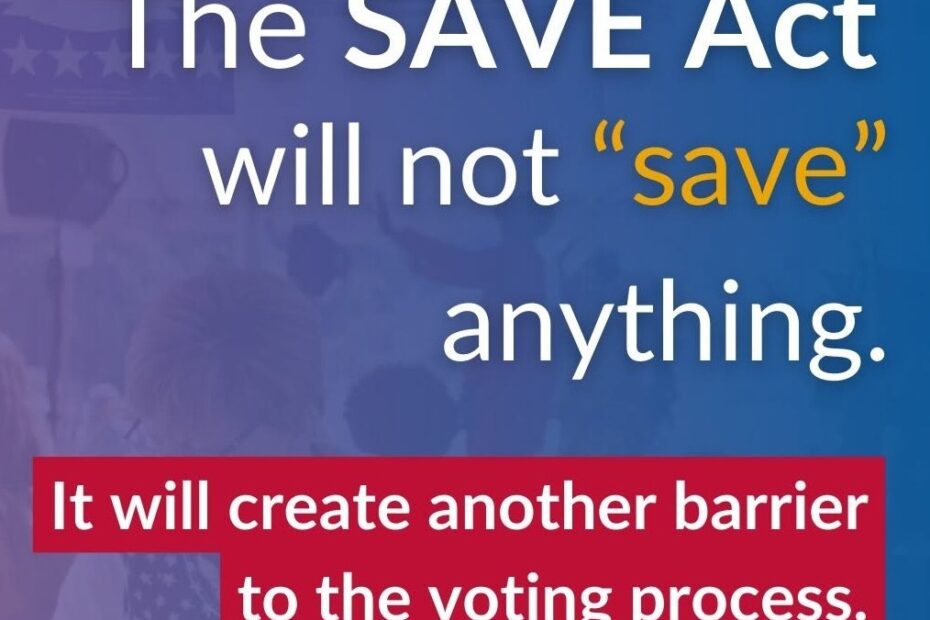
As of April 2026, the Safeguard American Voting Eligibility (SAVE) Act has been stalled in the Senate; what would it mean for this proposed law to be passed? The basis of the piece of legislation states that citizens would need to provide documentation to support their citizenship. While this general statement is one I can support, it is clear that the unintended consequences prove that this act cannot be implemented.
The first concern shared by the public is the effect it will have on married women, specifically those that decide to change their name. They would need to go through the process of getting new documentation that supports this change. Again, this is a general idea I can support. However, upon further research, it is naive to hope that the average American is able to manage their own lives, while keeping up to date with documentation that they do not require in their day to day lives. In fact, the Poynter Institute reveals that only 66% of married women have documentation up to date with their legal name. While the act does not prevent them from obtaining this documentation, it creates a hurdle that many women will choose not to persevere through, which ultimately decreases voting turnout. Regardless of which party they would vote for, preventing their vote prevents the election from representing the true proportion of people in favor of a certain candidate.
Similarly, minorities in the United States are affected by the SAVE Act. Brennan Center for Justice describes that 11% of adult minorities do not have updated legal documentation prepared. Unlike a percentage of married women, there are systematic issues that prevent them from updating this documentation at all, or in a timely manner. Lower income individuals may not be able to obtain a driver’s license, which is the most common form of identification. Even if they are financially capable of obtaining a driver’s license, if they lack a birth certificate, they are still prohibited. While this may be uncommon, older Black people born during the Jim Crow era were born at home and therefore did not receive birth certificates. While dedicated people may be able to persevere and obtain this identification, the effect of these regulations proves to have an effect as nearly half of Black Americans do not have documentation that is up to date.
As a democracy, the United States must uphold the value of representing as many people as possible. Decreasing the amount of people that are able to vote in elections goes against this belief, and for that reason I am against the SAVE Act. The suggestion of this act proposes that those in support of this act are not operating in support of citizens’ true beliefs; to me this is more concerning than the act itself.
Return to the Winona Smith Scholarship Recipients Page | Return to the Winona Smith Scholarship Information Page