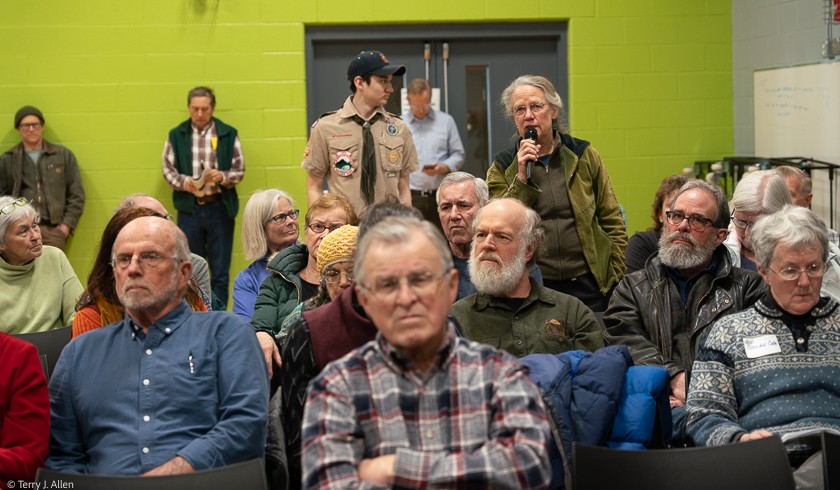
Images Credit: Terry J. Allen, East Montpelier Town Meeting Day
What is Town Meeting Day?
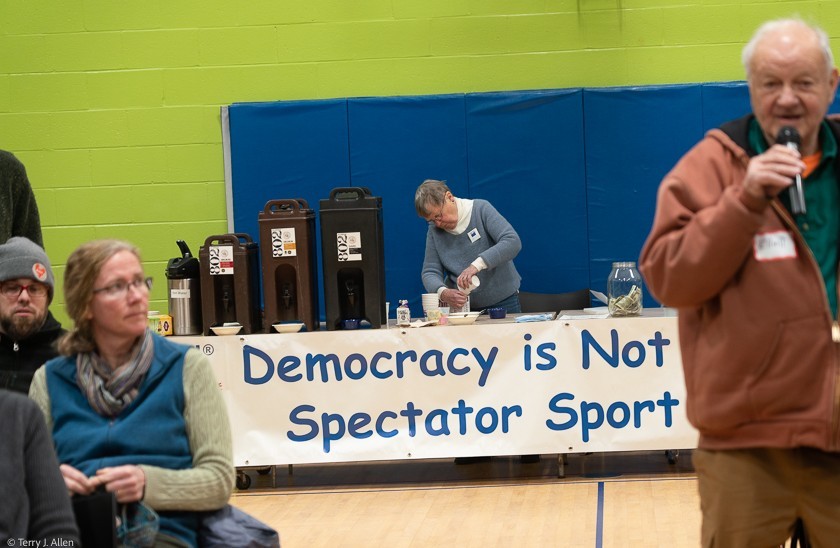
Town Meeting is a cherished Vermont tradition that originated in 1762. It is the basic form of governance for Vermont’s 247 towns and cities where townspeople gather to deliberate the business of their town. They elect local municipal officials, debate town issues, and approve or reject town and school district budgets including bond votes for infrastructure upgrades. Elections are nonpartisan. The first Town Meeting was held on March 31, 1762, in Bennington, well before the founding of the Republic of Vermont. Col. William Williams was moderator.
Historically, Town Meeting is held the first Tuesday in March. However, Vermont law gives towns the flexibility to hold Town Meeting at a time it believes is more convenient for its voters such as Friday, Saturday, or Sunday before Town Meeting Day or on an entirely different date as late as April. Vermont’s presidential primary is always held on the first Tuesday in March, regardless of whether a town chooses to hold its Town Meeting on a different date.
Some communities also vote on the school budget (at a school district meeting warned for the same day as or day before Town Meeting). The report and warning for your school district may be posted on the town website, or you may need to visit your school district’s website to track down the documents. In many instances, school district meetings are held by Australian ballot only, with informational meetings held earlier, in accordance with law.
Most towns offer voting information and ballots on their town websites. To find out how your community handles Town Meeting Day, call or email your Town or City Clerk’s office.
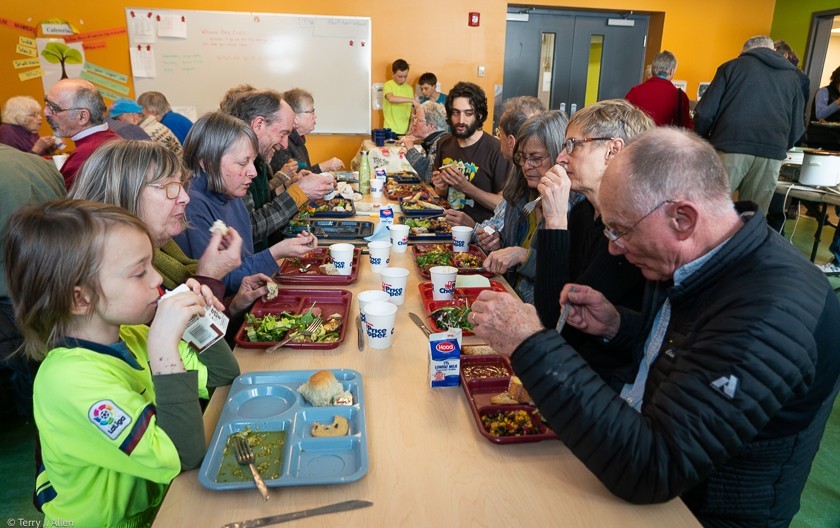
Many towns organize a potluck before or after voting; others have bake sales and have community organizations set up informational tables.
Today, Town Meeting does not draw the number of eligible voters that it used to bring out. Many people feel they no longer have the time or ability to attend such meetings. However, it is also uncertain whether voters can really understand what the articles they’re voting on mean without a thorough, in-person discussion at Town Meeting or in informational meetings held earlier when the Australian ballot is used. Keep in mind that currently 22% of Vermonters are disabled and many can’t even attend Town Meeting, participate in the discussion, or vote if the Australian Ballot is not offered. It may be time to continue the practice of Town Meeting but find ways to make them more inclusive so that every resident has a vote on their taxes, representatives, and so much more. In 2026, 68% of towns in Vermont still only had floor votes at their Town Meeting.

The Basics
Thirty to forty days prior, towns post a Town Meeting Warning in at least three public places telling residents the date, time, place, and agenda for the meeting. The Warning may also be mailed to residents within the pages of the Town Report. If the Australian (paper) ballot is used, the warning and notice provides information about the polls, voter registration, and how to get an absentee ballot.
Town Meeting is a holiday for employees of the state government. Employees in private business can take unpaid leave to attend Town Meeting, upon giving their employer seven days’ notice.
Informational Meetings or “Pre-Town Meetings” occur before Town Meeting Day. They are generally warned at the same time as Town Meeting. Their purpose is to give voters a chance to raise questions and hear explanations about items on the Town Meeting agenda or other business that can be attended to by the Selectboard. Many voters find that their town’s Annual Town Report is a great resource for information before, during, and after Town Meeting. If you did not receive a copy of the Town Report in the mail, contact your Town Clerk.
Under the American with Disabilities Act (ADA), individuals may request accommodations to be able to participate and vote in Town Meetings. The best way to gain accessibility is to have someone at this year’s town meeting make a request that future town meeting use the Australian Ballot in addition to the Town Meeting. In this way, the community can plan ahead to allow ALL residents the opportunity to participate and vote.
Who can vote on Town Meeting Day?
You must be 18 years old, a U.S. citizen, a legal resident of the town, and a registered voter. In Brattleboro, 16- and 17-year-olds can vote in municipal elections. If you live in Montpelier, Burlington, or Winooski and are a legal resident, you can vote in local elections. You do not have to be a U.S. citizen.
Non-voters (people who live in other towns, people who are not old enough to vote, or people who live in town, but are not registered to vote or are registered elsewhere, cannot vote at Town Meeting. A non-voter does not have a right to speak at Town Meeting unless the meeting passes a motion to allow the individual to “address the assembly.” This motion must pass by a two-thirds majority vote. Due to the informal nature of the “other business” agenda item, the Moderator may ask those assembled if they will allow comments from specific persons who are recognized as non-voters. This practice generally occurs when members of groups outside the community wish to address the voters regarding informational matters.
Voting At Town Meeting
Voting can be done in-person (floor vote) and/or by paper ballot (Australian ballot). The mix of in-person and ballot voting depends on the individual town or city. Some towns do both — some items for the ballot, some items for the live meeting. Your town’s Town Meeting Day warning will tell you how everything will happen.
Floor Vote Meeting
People gather at a set time at a public meeting place chosen by the Select Board, like the town hall or local school.
Voting is done in three ways: (i) Voice Vote (viva voce), “yea” or “nay;” (ii) Standing Vote, used if the vote is too close or a voter disagrees with the results of a voice vote, in this case, a show of hands allows for a visual count; or (iii) Paper ballot. A voter may call for a vote by paper ballot and if seven voters support this motion, pieces of paper are distributed for voters to write in their vote.
Floor meetings can last a few hours or go all day. The length of the meeting depends on how many articles are on the warning and how much discussion there is over issues raised.
Australian Ballot Meeting
Australian ballot voting occurs in voting booths at designated polling places where voters mark pre-printed ballots that are counted when the polls close. Town Boards of Civil Authority (BCA) determine when the polls open (between 5:00 a.m. and 10:00 a.m.). All polls close at 7:00 p.m. Voters who are disabled as well as those who are ill, can request their ballots be delivered to them by notifying the Town Clerk ahead of time.
A town must vote to use the Australian ballot system. Most towns choose to vote on some topics this way and vote others at the traditional meeting. Most towns use Australian ballot to elect town officers and decide big-ticket items like borrowing money to build a new town building. Towns using the Australian ballot generally have higher voter participation rates.
What Happens on Town Meeting Day?
The Moderator is the presiding officer at Town Meeting. He or she calls the meeting to order andannounces the first article listed in the warning. Before voting, those attending in person can speak for themselves, make motions, ask questions, listen to their neighbors, engage in meaningful discussion, persuade those present to vote for a particular measure, and clarify or amend items. Voters hear and approve reports from town officers, elect new officials, and review and approve a budget for the town. They make motions to adopt the article, second, accept, discuss, amend it, or close debate. Voters also decide whether to raise money from taxes to give to groups that serve the town such as a senior center, food bank, or transportation program for the elderly.
The moderator puts motions to a vote on each item of business and announces decisions of the voters. Unless voters decide to pass over an article or rearrange the order of articles, the meeting will address each article in turn, from first to last.
Most items on the warning are required by law, but some articles are added by the selectboard to get feedback or approval from citizens on an issue facing the town. Other articles can be added by local officials or citizens who bring in a petition signed by five percent of registered voters of the town 40 days before Town Meeting Day.
Some towns discuss social issues facing the region, the state, or the country even if the decision has no legal standing (nonbinding vote). Past examples include whether to ban genetically engineered seeds, whether the Vermont Yankee nuclear power plant should close, or whether the country should go to war.
The Town Clerk keeps minutes of the discussion and records the votes.
Elections of Local Officials
At Town Meeting, voters elect a variety of officials to serve terms from one to three years. Officials elected will vary from town to town, but generally include Moderator, Selectboard members, Town Clerk, Treasurer, Listers, and Auditor.
Towns that elect officers by Australian ballot require candidates to submit a nominating petition signed by 30 voters or one percent of the checklist – whichever is less. The petition must clearly indicate the office and term length on the petition prior to circulating it for signatures. The nominating petition must be filed with the municipal clerk by 5:00 p.m. on the sixth Monday preceding the day of the election.
In towns where it is difficult to find people willing to run for town office, if no one is elected, the selectboard must appoint someone to fill the vacancy.
Annual Town Report
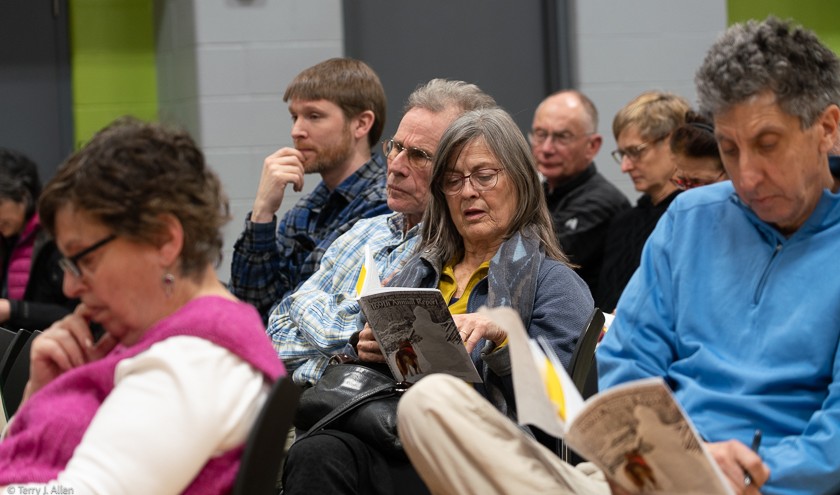
The Town Report (Annual Report) is an essential reference tool for Town Meeting, and it is vitally important that you read it prior to the meeting.
It typically contains the Warning for Town Meeting and ballot items up for vote, an audit of the previous year town and school expenditures, proposed budgets for the coming year from both Town and possibly, School District. One can also expect to read reports from the Selectboard, Zoning Board, and tax collector, vital records information, and, sometimes, a listing of the salaries and payments made to town officials during the year.
The law requires towns to make Town Reports available to every voter no less than 10 days prior to Town Meeting. Some towns mail the report directly to each home. You can also stop by the Town Office to get a copy or call to get one sent by mail. Most towns with websites provide an electronic copy as soon as the information is available; often before you receive it in the mail.
Basic Parliamentary Motions: A Quick Look
Adapted from “The Meeting Will Come To Order” by the Vermont Institute for Government
Discussion and decision making at Town Meeting are based on motions, which set the assembly into action. Here are some basic motions and common phrases you will hear at Town Meeting:
The Main Motion
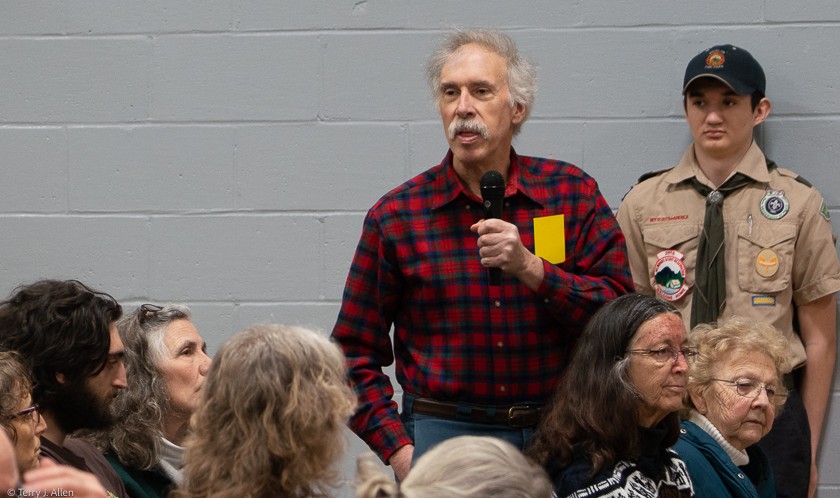
Example: “I move to accept Article 6 as written.” Each article on the warning must be “moved” and seconded; it is then ready to be discussed by the group. In discussion, citizens raise their hands and are called on by the Moderator. When you are called on, stand up, state your name, then speak your mind.
The Amendment
“Amending” a motion means proposing a change to the motion. Example: An article is moved and seconded; then, during discussion, someone says “I move to amend Article 17 by reducing the dollar amount from $10,000 to $5,000.” After someone seconds this, debate shifts to discussing this amendment. Once people have discussed the amendment, the Moderator puts the amendment to a vote. If the voters reject the amendment, the group now returns to discussing the original main motion. If voters approve the amendment, the discussion focuses on the main motion as amended.
The Vote
After the group deliberates on a motion and the Moderator feels all points of view have been heard, s/he will call for a voice vote. If you are in favor of the motion, you will say “aye.” If opposed, say “No” or “Nay.” The Moderator will then announce the results of the vote.
Another form of voting you may expect to see at Town Meeting is a show of hands or a standing vote. This may be asked for if the Moderator feels the voice vote was too close to call, or if a voter disagrees with the Moderator after the result of a voice vote is announced.
And for any vote, any voter may move that the vote be taken via paper ballot; if seven voters support this motion, pieces of paper will be distributed, and each voter writes their vote. Sometimes a checklist and a ballot box are used in this method; sometimes tellers simply collect the ballots and count them on a table in front of the room.
Point of Order/Appeal
If you don’t understand a ruling of the Moderator, speak up, saying “Point of order, Mr. (or Ms.) Moderator.” After the Moderator recognizes you, ask your question.
If at any time you disagree with a ruling of the Moderator, you may appeal his or her decision. The Moderator is obligated to ask the assembly, “Shall the Moderator’s decision be sustained?” If a majority of voters say “no,” the Moderator’s ruling is overturned.
Pass Over
Sometimes it becomes clear to voters that they don’t want to vote “yes” or “no” on an article; they would prefer not to vote on the article (main motion) at all. Traditional Vermont Town Meeting practice calls this a motion to “pass over” the article; if offered after a main motion is made, a simple majority is required.
Limit or Cut Off Debate
If voters feel that debate on a certain article could go on all night if some control mechanism were not in place, someone might move to limit debate, say to a total of 20 minutes. If two thirds of the voters agree, debate can be so limited.
In a case where debate has gone on long enough—voters have made up their minds, but some people are still repeating the basic arguments—a voter could move to cut off debate, also referred to as “calling the question.” Once moved and seconded, calling the question is a non-debatable motion. If you agree that all voices have been heard and you are ready to vote on the issue at hand, you should vote in favor of calling the question. However, if you want to continue discussion, you should vote against calling the question. Two thirds of the group must vote yes on calling the question to cut off debate; otherwise, discussion continues.
Citizens come to the meeting to speak and to hear each other’s viewpoints. In most cases, it is not necessary either to limit or cut off debate; the Moderator will simply call for a vote when s/he feels that all points of view have been heard. This avoids having to vote on calling the question.
A Note About Proper Amendments
A Town Meeting cannot take up an issue unless it is warned. The same general principle applies to amendments. You can’t take an article to buy a truck and amend it to buy a road grader, because the amendment raises a subject that hasn’t been warned. For the same reason, you can’t convert an article to raise money by taxes to an article to borrow money to pay something.
Amendments must be germane to the motion they seek to amend; amendments must relate to the motion. An amendment cannot introduce a new and independent question or raise an issue (disguised as an amendment) previously decided by the assembly.
Key Terms to Know
Credit: Vermont Public Your guide to Vermont’s Town Meeting Day tradition in 2025, published March 3, 2025. You will find Vermont Public’s Town Meeting coverage here
Moderator: Moderators are elected to one-year terms. Duties include reviewing the warrant (agenda), presiding over Town Meeting, deciding questions of order, making public declarations of each vote passed, and prescribing rules of the proceedings.
The moderator uses Robert’s Rules of Order to run the meeting and ensures that the meeting is orderly and fair.
Australian ballot: A standardized paper ballot filled out in private. A person can show up at the polls or vote early by requesting an absentee ballot and mailing it in. Printed ballots are available 20 days prior to the school district or Town Meeting for absentee voting.
Local option tax: An extra one-percent tax that Vermont municipalities can add to transactions to bring in more money for the town. This one-percent tax can apply on top of the normal state sales tax, rooms tax, and/or meals and alcoholic beverage tax. Voters choose what kinds of transactions should get the extra tax. Only some municipalities are eligible to impose this tax under state law.
Fiscal year: The year that begins July 1 and ends on June 30. Most Vermont towns use a fiscal year for their budgets (rather than a traditional calendar year), and all school districts use a fiscal year.
People refer to the fiscal year by the year it will end — for example, the fiscal year 2026 budget is the one that ends on June 30, 2026.
Municipal property tax rate: The property tax rate used to fund town operations. It’s a separate tax rate from the tax that funds education – add them both together to find your total tax rate.
Homestead education property tax rate: The property tax rate that applies to Vermonters’ primary homes. Two key variables impact your town’s rate: how much needs to be raised statewide to fund all schools, and how much your local school district is spending per-pupil. The formula that determines each district’s per-pupil spending tries to account for the fact that some kids — like English language learners, low-income students, and children in rural settings — usually cost more to teach.
Non-homestead education property tax rate: The property tax rate that applies to second homes in Vermont, camps, business property, industrial property and more.
Property tax credit: This is how Vermont adjusts people’s property taxes to reflect their income. You might also hear people call this “income sensitivity.” About 70 percent of Vermont households get a property tax credit. It shows up on your tax bill on the line “state payments.”
Grand list: In the context of a town budget, the grand list is the sum of all taxable property within the town boundaries. Grand list growth means more property value and more tax revenue.
Lister: A resident of the town, elected by voters, who assesses the fair market value of all property in the municipality. Some towns have switched to hiring a professional assessor instead.
Common level of appraisal: A number, expressed as a percentage, that estimates the accuracy of the listed property values in a Vermont town. A lower number means the properties in that town are undervalued compared to the market. The common level of appraisal is used in the Vermont education funding formula to attempt to make sure that taxpayers pay a fair amount in relation to their neighbors in other towns.
Constable: A person elected at Town Meeting (or appointed by the selectboard) who can do the following things:
- serve court papers
- collect taxes
- remove disruptive people from Town Meeting
- kill injured deer
Constables must go through official training at the Vermont Criminal Justice Council to be able to serve in a law enforcement role
Town Health Officer: The person in every Vermont town, nominated by the selectboard and appointed by the state health commissioner, who’s responsible for protecting public health in their community. One crucial role of the health officer is to investigate complaints about unsafe rental housing. Other issues include the health aspects of septic system failures and animal bites.
Fence viewer: A local official called on to arbitrate disputes over fences and land boundaries, to require a fence to be built or one to be torn down. It’s a holdover from Vermont’s agricultural past. There can be three fence viewers in a town, if the selectboard wishes to appoint them, along with similar positions such as weigher of coal and inspector of lumber, shingles, and wood.
How to Read a Town Budget
When it comes to reading the Town Budget, there are a few basic principles to keep in mind.
- Check out your town’s total expenditures: Expenditures are what your town wants to spend money on in the next fiscal year. This could be a new fire truck, printers, office supplies, or new personnel. Look for the line that shows you the total — not the line items.
- Check total revenues: Once you know how much your town wants to spend, check out how they plan to pay for everything. Taxes are one way, but there are other fees, grants, and money that a town collects. You can look at the line item breakdowns to see where the town gets its cash. Now the revenues here are projections — so it’s good to look at what the town’s revenue projections were last year, and what they actually came in at (most towns will include this information).
- Check the tax rate: Towns should include in the budget or the accompanying report an overview of how the proposed budget would affect municipal property taxes.
How to Read a School Budget
- Check the per pupil spending: This is the most important bottom-line number if you’re thinking about taxes. Per pupil spending is the total education spending divided by the number of kids going to school in a district. But in Vermont’s equalized per pupil calculation, the number of pupils is “weighted” — meaning it accounts for certain factors, like the number of lower-income students in a district. Most districts should also include whether the per pupil spending is projected to increase or decrease compared to the current budget, and by how much.
- Look at the total education spending: There will be a column that shows the total amount your school district wants to spend — that includes salaries and benefits for everyone working in the schools, classroom supplies, and more. Typically, the overall education spending number is the whole proposed budget after taking into account things like revenue from grants, incoming tuition dollars and the prior year’s surplus or deficit.
- Compare it to last year: Most school districts will include a note how much of an increase (or decrease) the new budget is compared to the previous year’s budget. Some districts will include written explanations about what’s driving the change, others might include a line-by-line breakdown of the budget where you can see exactly where spending is going up or down.
Resources
Vermont Public Town Meeting Coverage
Vermont Institute for Government
The Meeting Will Come to Order
Welcome to Town Meeting! Explanation of Some Common Phrases You Will Hear
How and Why to Read a Town Report
Vermont’s town meetings offer lessons in democracy for the rest of the U.S. The Associated Press
How Does Vermont Fund Its Schools? Vermont Public, 2025
All Those in Favor Rediscovering the Secrets of Town Meeting and Community by Susan Clark and Frank Bryan with 10th anniversary update supplement