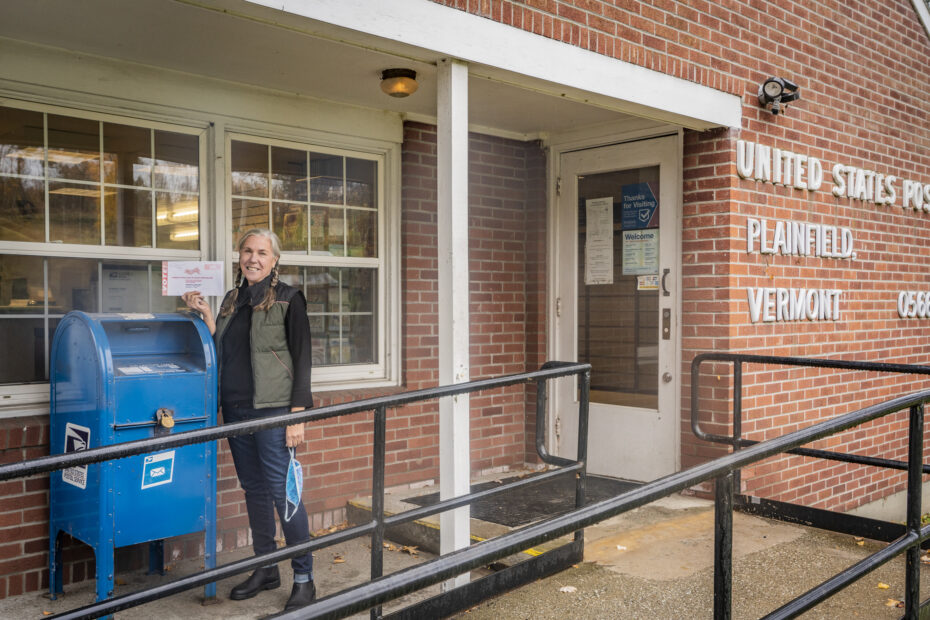
By Sue Racanelli
The League of Women Voters of Vermont believes it is important for us to get our facts straight and know the truth behind fraud allegations on mail-in voting.
Mail-in Voting or Vote by Mail is a staple of US elections for over 100 years that allows voters to cast their ballot through the mail. According to the U.S. Election Assistance Commission, nearly a third of ballots cast in the 2024 election, were submitted by mail.
In August 2025, citing spurious claims of massive voter fraud, President Trump vowed to use an executive order to end vote-by-mail before the 2026 midterm elections.
The President does not have the authority to ban vote-by-mail via executive order. The Constitution clearly directs states to determine the “times, places and manner” of holding elections. Only Congress has the authority to override states when it comes to election laws.
THE TRUTH BEHIND THE FRAUD CLAIMS
There is a lot of misinformation floating around about voting by mail such as voting more than once, or using the name of another person to vote, or voting as a non-citizen. Please know that fraud is extremely rare for mail-in voting.
Vermont has strict protocols and security measures to protect against fraud and ballot tampering. Voters should feel very comfortable with the security of the system. Here are two primary safeguards:
1. BALLOT DESIGN: Mail-in ballots are printed on a specific type of paper with technical markings that are difficult to duplicate. The production of counterfeit ballots would require mimicking a ballot’s size, style, paper weight, envelope, and other features, which differ by county and often change with every election cycle. Each phony ballot would then have to match the name and signature of a registered voter in order to be counted.
2. SECURED BALLOT ENVELOPES: Ballots are sent in specially designed envelopes that have security features such as watermarks, barcodes, and a unique identifier for each voter, which tracks the ballot from drop-off to delivery and processing.
Additionally, to identify any irregularities, discrepancies, or suspected fraud, Vermont has:
- pre- and post-testing of voting equipment
- verified ballot signature comparisons
- chain of custody
- secure drop boxes
- ballot counting processes open for public observation
- post-election audits to ensure the vote count was done correctly and we can trust the results
Penalties for voter fraud are severe: up to five years in prison and $10,000 in fines for each act of fraud.
So, go ahead and confidently vote by mail! This is a vital voting option for many voters including those with disabilities or accessibility issues, those with strict work schedules, those who are immune-compromised, and the military and overseas voters.
NOTE: Voters mailing a ballot within a week of Election Day should consider using an official drop box or in-person drop-off location.